Condensed version for publication
PLANTIA: Generative Optimization of 3D Physical Layouts for Agribusiness via Hybrid Artificial Intelligence
1. Context
PLANTIA proposes a hybrid artificial intelligence platform to automate and speed up preliminary industrial layouts and sales proposals in the pre-sales phase. Initially aimed at agro-industrial processing plants, it combines large language models (LLMs) and combinatorial optimization to turn demands written in natural language into optimized equipment arrangements, producing at once the 3D layout, the equipment list, the investment estimate (CAPEX) and the visual model for SketchUp.
Development takes place in partnership with the university, with shared intellectual property, and the platform is also structured as research infrastructure, opening the way to theses and a possible academic spin-off.
2. Objectives
To develop, test and certify a platform that integrates LLMs and optimization to automate conceptual 3D layouts and sales proposals for industrial plants. Specific objectives:
- Natural language: interpret written demands and produce structured process and equipment specifications.
- 3D modeling: build blocks, connectors and rules for adjacency, orientation and flow.
- Optimization: build a solver that generates layouts according to spatial and operational criteria.
- 3D generation: automate SketchUp scripts, including the visual features of the equipment.
- Proposals and costs: combine equipment, layout and CAPEX estimates into automatic sales proposals.
- Human in control: allow adjustments, choosing between alternatives and returning to previous project states.
3. Relevance and fit with the call
The project tackles a bottleneck in preparing proposals and budgets for agro-industrial plants — today manual, slow and prone to rework — cutting pre-sales time and effort and improving efficiency in the agribusiness chain. Its modular architecture allows future use in other industrial sectors.
The hybrid AI architecture — a semantic module based on LLMs and a decision module based on combinatorial optimization — matches the definition of AI in the Brazilian Artificial Intelligence Plan (PBIA) and its pillar on AI for business innovation, while reducing dependence on foreign CAD and simulation tools with costly licenses and little focus on budgeting.
4. Methodology
Development follows a spiral cycle. A local LLM interprets the process description and turns it into a structured JSON specification, without doing physical calculations. The specification feeds a discrete three-dimensional model of the building, in which machines are blocks with dimensions, positions and connectors, subject to compatibility and flow rules. An optimization solver defines the arrangement respecting space, non-overlap, building limits and connectivity, while minimizing occupied area and interconnections. The layout is automatically converted into Ruby scripts for SketchUp, and parametric models estimate manufacturing and assembly CAPEX. The whole process is coordinated by an interface where the engineer combines natural-language commands with graphical controls, with a decision history that allows reviewing and experimenting without losing earlier configurations.
5. Technical feasibility — proof-of-concept evidence
The core of the concept has already been implemented and tested in a proof of concept: a written request is turned into a positioned, connected 3D factory layout and exported, with no manual intervention. It is a simplified version of the final product, but it shows the approach works end to end.
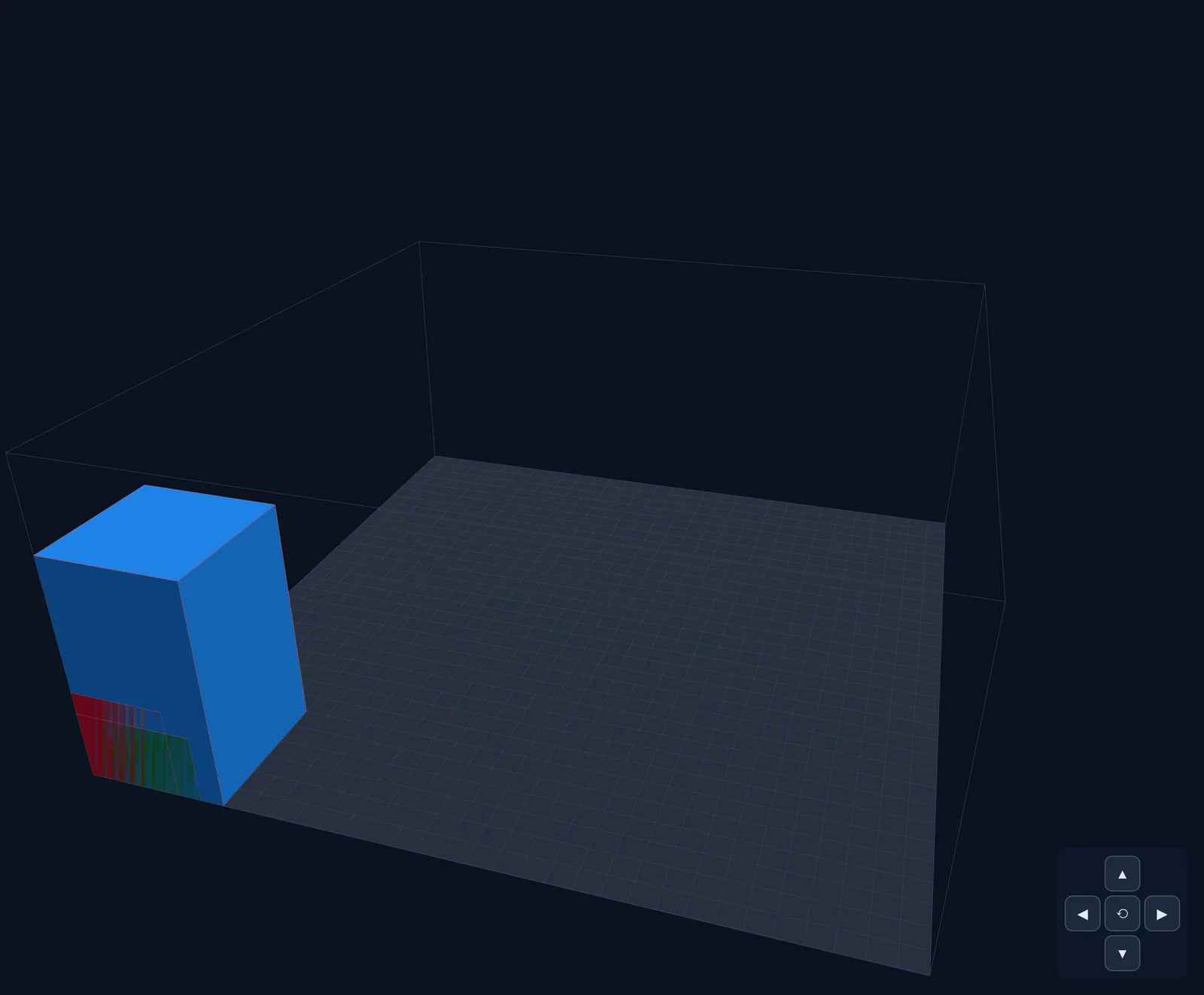
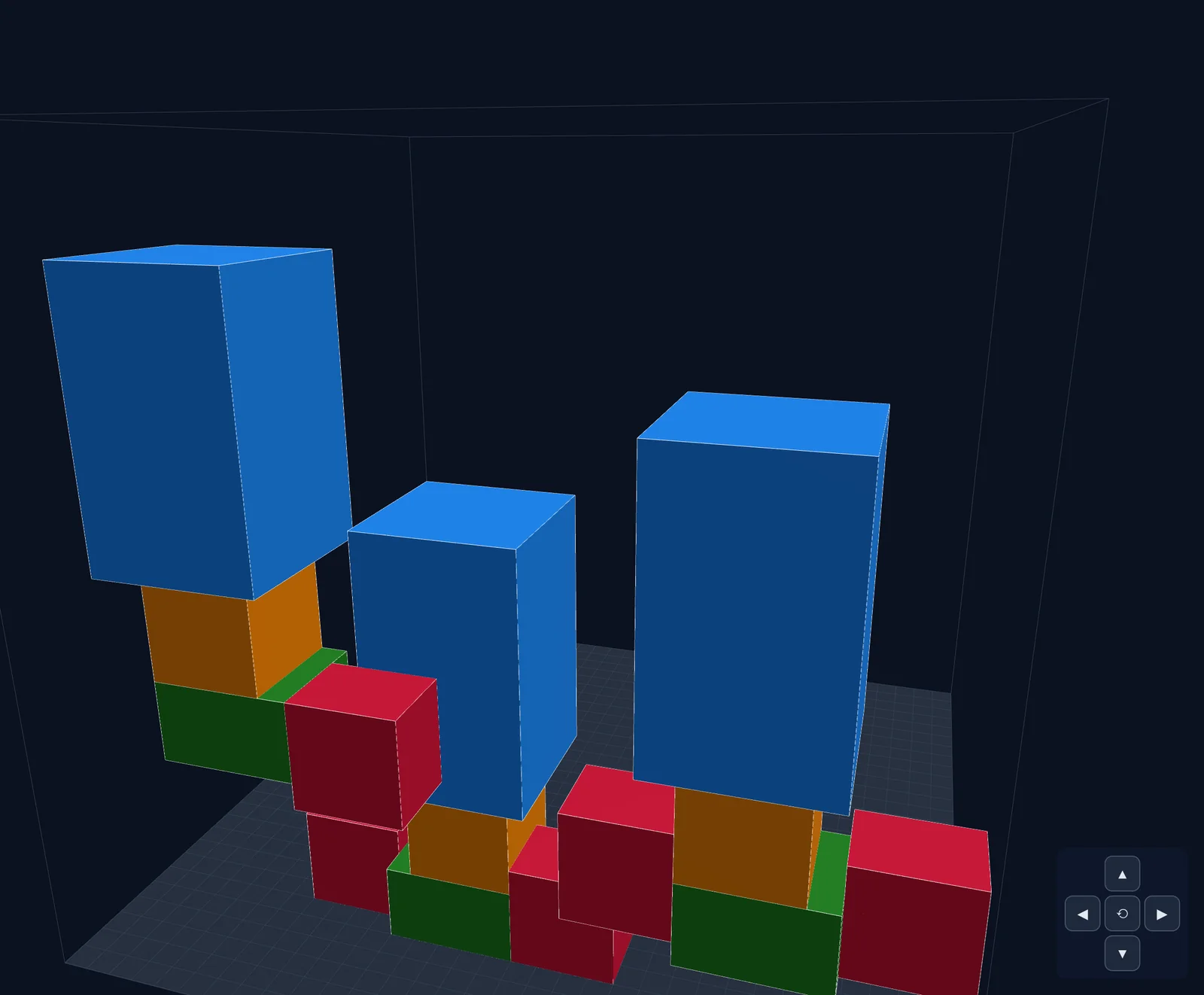
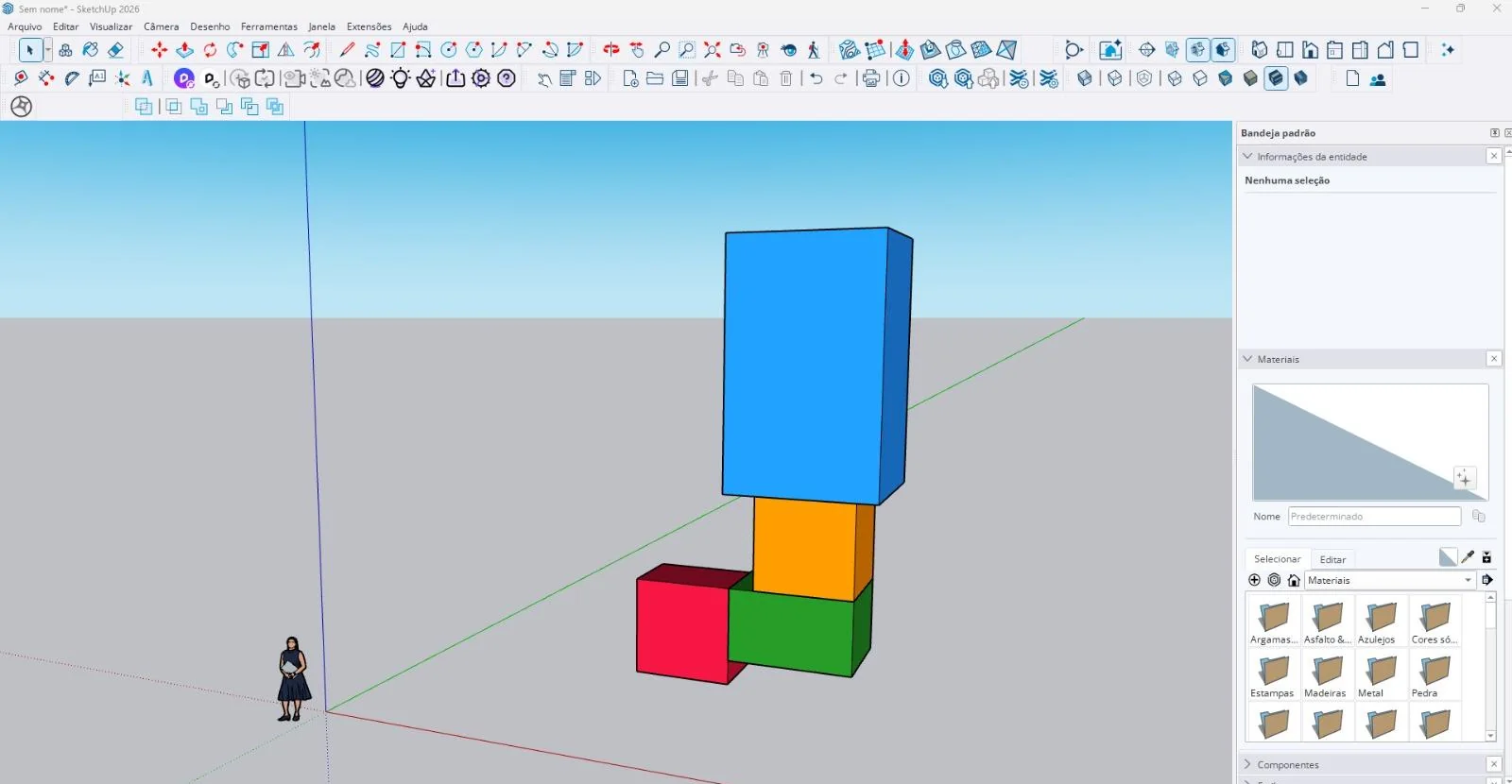
What the POC does not do yet — and the project will build: optimize for an objective (cost, weight, space) instead of only finding a feasible solution; include structural constraints; expand the equipment catalogue; build the interface with a history tree; generate proposals; and improve LLM information extraction.
The goal for this phase is 50% to 70% automation of the full process: enough to create value while keeping the engineer in charge of cases that require technical judgment.
6. Market and competitors
Layout modeling, simulation and optimization tools exist, but they target engineering and planning, generally do not use LLM-based interfaces and do not address pre-sales.
| Tool | 2D/3D layout | Automatic generation/optimization | LLM / natural language | Pre-sales focus | SketchUp output |
|---|---|---|---|---|---|
| SketchUp | Yes | No | No | No | Yes |
| visTABLE | Yes | Yes, heuristic optimization | No | No | No |
| Siemens Tecnomatix Plant Simulation | Yes | Yes, optimization/simulation | Yes, via Copilot | No | No |
| FlexSim | Yes | Yes, simulation and optimization | Partial | No | No |
| AutoCAD Plant 3D | Yes | Partial, design automation | No | No | No |
| AVEVA E3D Design | Yes | Yes, including generative design | Yes | No | No |
| CADMATIC | Yes | Partial | Partial | No | No |
| PLANTIA | Yes | Yes, via optimization solver | Yes | Yes | Yes, via Ruby script |
7. Innovation and intellectual property
A search of the BADEPI/INPI database (717,254 patent and software documents, 2000–2024) using terms tied to the solution's components — AI/LLMs, layout optimization, 3D modeling, voxelization, connectivity, parametric CAD and CAPEX estimation — found about 5,000 documents with some match, almost always for isolated components; only 8 combined two concepts, and no software showed a combination similar to the proposal, indicating potential novelty.
8. Timeline
| Module / activity | Period |
|---|---|
| Problem survey and formalization | M1 – M3 |
| Semantic processing and local LLM | M2 – M6 |
| 3D representation and voxelization | M3 – M7 |
| Combinatorial optimization solver | M5 – M10 |
| Ruby script and SketchUp integration | M7 – M12 |
| CAPEX engine and parametric budgeting | M9 – M12 |
| Copilot interface and state tree | M9 – M12 |
| Integration and performance testing | M10 – M15 |
| Field validation and certification | M13 – M24 |